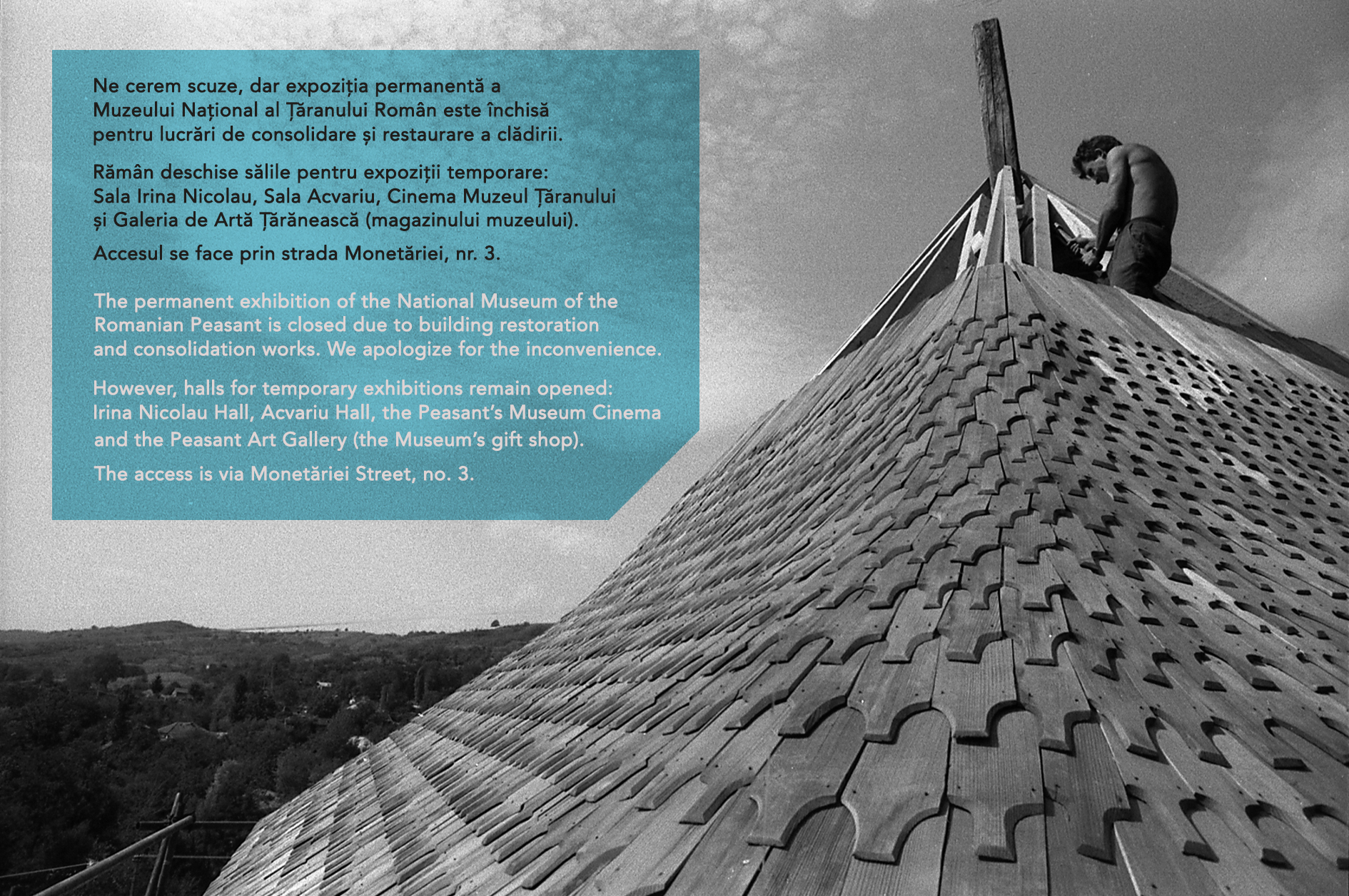
The old peasant did not surround himself with too many things, shiny and dead. His objects were few, never only decorative, impersonal or inorganic. His hands were torturing the rough material, ennobling it through suffering. The hemp spun yarn, the wood, and the wheat end in the martyr object. Stories say that any apparently humble house, any domestic object has the power to save you from death. In extraordinary conditions the lance, the hood and the pipe of the young shepherd, the foreigner, whose name the song doesn’t mention, watch the death of the master left to their holy guard. Tragic happenings awaken the energy of peasant objects. Unsuspected power is born from profane appearances. A living museum, conceived against dead things, must confess to these old meanings without words.

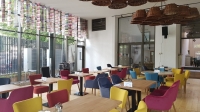


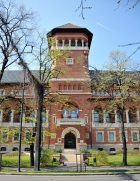
The National Museum of the Romanian Peasant relaunches its virtual tours
You can visit the permanent exhibition of the Museum (temporarily closed for reorganizing) by accessing the virtual tour not only on your desktop, which is the recommended variant to visit on the internet, but on your smartphone or tablet as well. The virtual tour is extremely generous, each room being represented through several detailed panoramas accompanied by the bilingual Romanian/English explanations of the audio guide. It is available online at www.360.muzeultaranuluiroman.ro/.
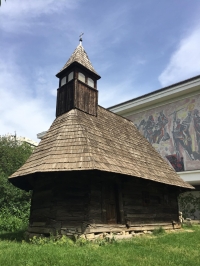
The virtual tour of the churches of the Peasant Museum also includes panoramas of the five wooden churches which are in the custody of the Museum, built outside the precinct: Groșii Noi, Julița and Troaș in Arad county, and Lunca Moților and Bejani in Hunedoara county. Two churches have been brought to Bucharest and exhibited: the one from Mintia, in the room Reculegere (Recollectedness), which you can see on the tour of the permanent exhibition, and the one from Bejani, placed in the courtyard. The other four have been restored, watched over and taken care of and are preserved in situ.
You are welcome to get in and visit them virtually, by accessing biserica.muzeultaranuluiroman.ro.
Besides, we invite you to feel like a child again along with your family in the virtual Museum of childhood: childhoodmuseum360.eu/ro. Explore the imagery of childhood both in the countryside and in the city and find out about holidays, traditional games and toys, illness and cure, names of boys and girls, texts written by and for children and so many oher wonderful things!
Back to main page








(1).jpg)









.jpg)
.jpg)